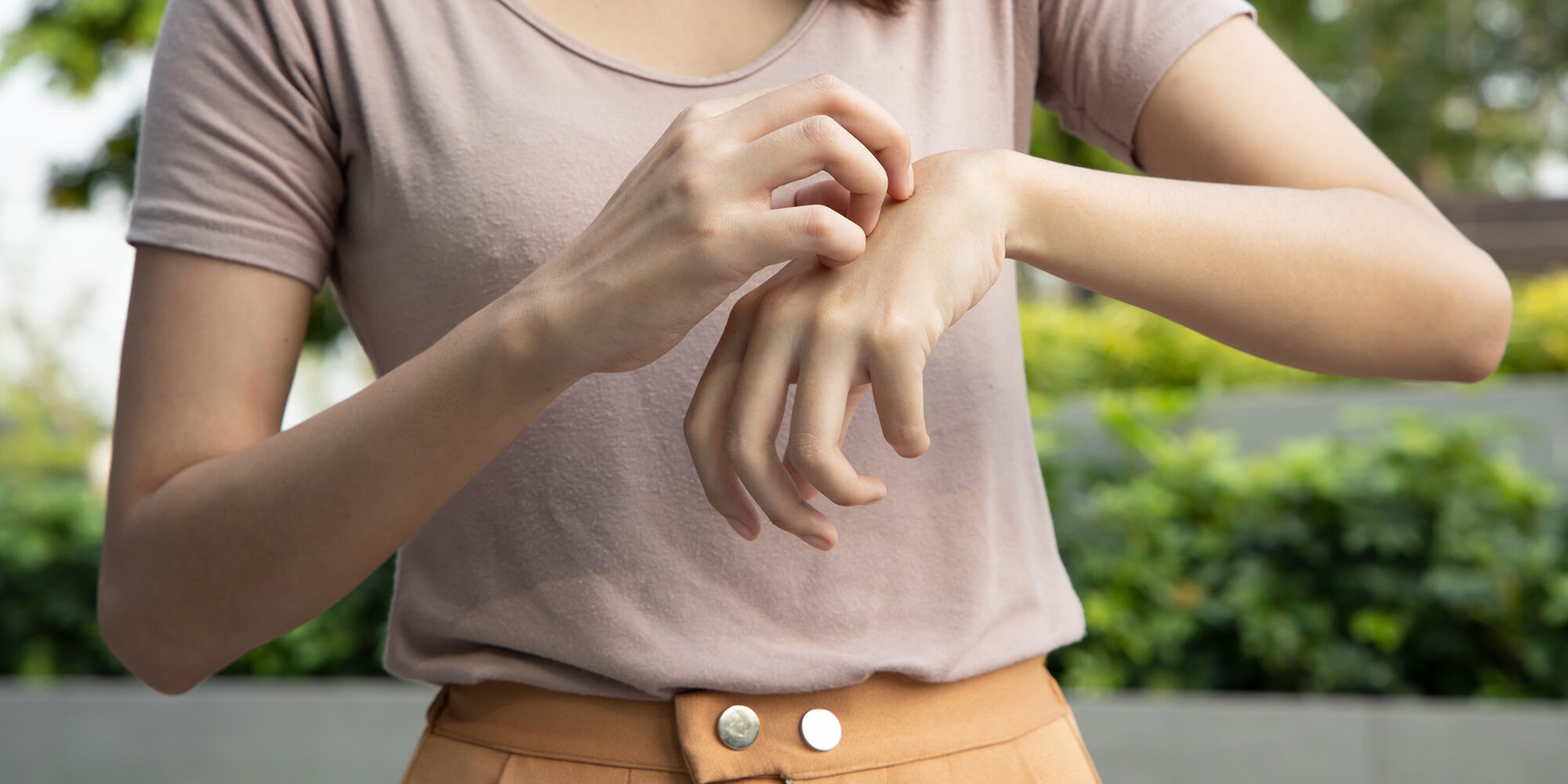
Eczema, also known as “atopic dermatitis,” is a noncontagious, inflammatory skin condition that is characterized by severe itching, redness, oozing, and scaly rashes. These symptoms can be painful, and can cause changes in skin color and blisters. Allergy plays a role in some patients’ eczema.
Eczema comes and goes over time. It results in very dry and sensitive skin, and can be made worse by exposure to many different things, including allergens such as pet dander or dust mites. Other common triggers include cosmetics, soaps, detergents, lotions with heavy fragrances, and hard water. For some people, weather changes (especially dry winter air), illnesses such as the common cold, or even stress may make eczema worse.

Children and adults diagnosed with eczema can manage the condition with the guidance of an allergist. In cases of moderate or severe eczema, an allergist may recommend prescription medication, including topical steroids and/or antihistamines.
When skin feels dry and itchy, many people buy over-the-counter lotion and start lathering themselves from head to toe; however, lotion may not be the best solution. In some cases, skin irritation is caused or worsened by your water. In fact, hard water affects many people who suffer from chronic skin conditions.
WHAT IS HARD WATER?
Hard water by definition is water that contains dissolved rock and minerals like calcium and magnesium. When water filters through the earth, it can break down minerals and absorb them. When hard water dries or evaporates, it leaves behind scale made up of dissolved minerals and rock. If you bathe in hard water, some of this scale may be left on your skin causing dryness and irritation. But another culprit is when soap and hard water mix.
Together, soap and hard water form a film that doesn’t rinse away completely. This is the soapy film that causes bathtub rings or deposits on shower doors and curtains, but it also leaves that same residue on your skin and hair. This film often clogs pores and prevents the natural oils in your skin from lubricating your skin and helping it retain moisture. This can leave your skin sticky, dry or irritated.
If you suffer from a skin condition like eczema or psoriasis, hard water can make things worse. Although hard water does not cause eczema or psoriasis, studies suggest that hard water can damage the skin and contribute to the development of chronic skin conditions or worsen symptoms for those who already have a skin problem.
WHAT SHOULD YOU DO IF YOU HAVE HARD WATER AND ECZEMA IS A CONCERN?
If you live in a hard water area and are concerned about eczema, you should consult with a medical professional first. You may be advised to investigate water treatment options to improve the quality of the water you use for bathing and washing. Contact the Karsare Water Systems staff who will conduct a water test to determine the hardness level of your water. Once known, you can discuss the best options for treating your water. Most likely, your water treatment professional will recommend a water softener to treat hard water.
If you bathe in hard water, your skin is taking on hardness minerals. No matter how much soap or how hard you scrub, you cannot get rid of all the hardness minerals, which causes a film to form on your skin.
HOW DOES A WATER SOFTENER HELP WITH ECZEMA AND SKIN IRRITATION?
A water softener works by removing calcium and magnesium ions from household water. This helps reduce the formation of soap scum and limits the mineral residue left behind on the skin barrier after washing. For people living in a hard water area, that can mean fewer daily irritants clinging to the skin. It’s important to note that a domestic water softener is not a medical treatment for eczema or atopic dermatitis. However, by lowering exposure to the minerals that contribute to subsequent skin irritation, softeners may help reduce one of the environmental triggers that make flare-ups more frequent or severe.
Because every case of eczema is different, always consult with a dermatologist or healthcare provider before making changes to your treatment routine. A professional can help determine whether adjusting your home’s water hardness could complement other strategies you’re already using, such as moisturizers, prescribed ointments or lifestyle changes.
If you’re managing eczema or simply dealing with the everyday effects of hard water, improving your home’s water quality can make a noticeable difference. A Culligan water softener reduces the calcium and magnesium minerals that cause buildup, soap scum and irritation, helping you protect your skin barrier and enjoy cleaner, soft water throughout your home.