WHAT IS A WATER SOFTENER?
Before learning about water softeners, let’s first define hard water. Hard water is water that contains dissolved minerals like calcium and magnesium. Water hardness is measured in grains per gallon (gpg). If water has 1 or more gpg, it is considered hard. Hard water can cause many problems like dry skin, dull hair, scale buildup in pipes and appliances, stains and spots on things that come in contact with water and other challenges throughout the home. Even low levels of hardness in water will coat faucets and showerheads, plug coffee pots, cause spotty dishes, and lead to dry skin.
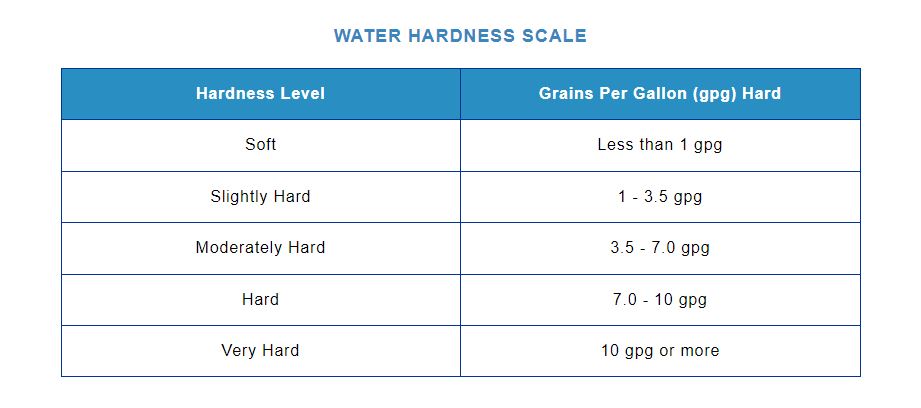
Soft water contains less than 1 gpg of hardness minerals (calcium and magnesium). A water softener is often what is used to remove the hardness minerals from hard water. Soft water is easier on you and your home, reducing or eliminating the harmful effects of hard water. If your home is affected by hard water, a water softener might be the solution to your water problems.
TYPES OF WATER SOFTENERS
Water softeners are often put into two categories. There are traditional water softeners that use salt to regenerate (salt water softener system) and salt free water softeners. Both treat hard water, but they work in different ways.
SALT-FREE WATER SOFTENER
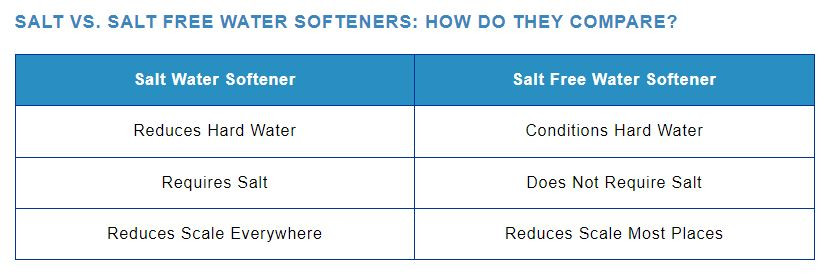
No salt water softeners are not really water softeners since they don’t remove hardness minerals or produce soft water. Salt-free water softeners change the chemical makeup of water. Salt-free systems crystalize the hardness minerals so scale will not form when the water flows through your water pipes. Essentially, the hardness minerals are still in your water, but they are in a different chemical state. In summary, a saltless water softener alters your water to reduce the effects of hard water.
SALT WATER SOFTENER
Salt-based water softeners use a process called ion exchange to remove the hardness minerals from water. Ion exchange occurs when hard water runs through a resin bed. The hard ions (calcium and magnesium) in the water are exchanged for the soft ions (sodium or potassium) that cling to the resin. When the resin bed has exchanged all the soft ions for hard ions, the system must regenerate (clean) the hard ions off the resin using either sodium chloride (salt) or potassium chloride. Once regeneration is complete, the resin is full of soft ions and the process is ready to start again.
WHAT’S THE DIFFERENCE BETWEEN SALT-FREE WATER SOFTENERS AND TRADITIONAL WATER SOFTENER SYSTEMS?
The obvious difference between a saltless water softener and a traditional, salt water softener system is that one uses salt to function and one does not. Essentially, the two types of systems are not alike. Salt based water softeners use a process that removes the hardness minerals from water. Many saltless water conditioners use a sequestering agent that links hardness ions together to control water hardness and iron. Additionally, the agent helps prevent corrosion of metal surfaces by coating them with a thin film when the water makes contact, but saltless water conditioners don’t really “soften” the water.
WHAT TYPE OF WATER SYSTEM IS RIGHT FOR YOU?
We know that water treatment can be confusing. There are so many different water treatment products on the market, and they each claim to be the best. It’s hard to know what you need, but KarSare Water Systems can help. We are an Authorized Culligan Dealer with over 25 years in the business, and we truly understand the water challenges in our area. We will come out to your home, office, or industrial location to provide a FREE Water Analysis and then recommend the most efficient, effective, and economical water treatment solutions to fit your needs.
WHICH IS BETTER?
A NO-SALT WATER SOFTENER OR A SALT WATER SOFTENER?
There are pros and cons to both types. Both a saltless water conditioner and a traditional water softener are solutions to treat hard water. Salt-free water softeners don’t require the use of salt or potassium chloride, so there are no salt refills. as we mentioned though, saltless water softeners don’t remove the hardness minerals from water.
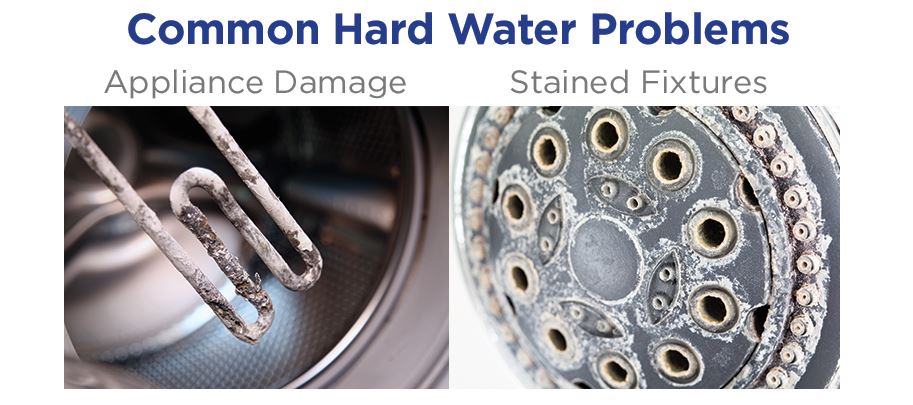
If your home’s water is slightly hard, a saltless system may work for you; however, a traditional water softener that uses salt is the best option, in most cases. The salt based system will eliminate hard water so you will not have scale buildup in your water pipes. Your water-using appliances will be protected; your dishes won’t have hard water spots; your sinks, showers and tubs will not have soap scum or scale buildup. Your skin and hair will be soft and smooth, and you’ll use less soaps, cleaners, shampoos and lotions. With a salt-free water softener, you may still see some issues with water-using appliances, and other hard water issues may still occur.
Some people want a no salt water softener because they are concerned about added sodium in their water. A salt water softener will add a small amount of sodium to your water, but not much. The amount of sodium in an 8 oz serving of softened water (which was treated to remove 18 gpg of hardness) would be approximately 30 milligrams. In comparison, the same serving size of low-fat milk contains 120 mg of sodium. Furthermore, rather than drink softened water, many people drink bottled water or treat their drinking water with a reverse osmosis system which significantly reduces sodium and other contaminants from the water.
HOW DO I KNOW WHICH WATER SOFTENER IS BEST FOR MY HOME?
Here are a few factors to consider when selecting the best water softener for your home.
- Is your home’s water source city water or do you have well water?
- How much water does your family use?
- How hard is your water?
- Does your water contain iron?
- What is your budget?
- What other water problems are you experiencing?
To figure it out, the best thing to do is schedule a water test with a certified water professional. They will test the water in your home and develop a water treatment plan based on the test results and your water treatment needs.
WATER TREATMENT SOLUTIONS FOR HARD WATER

Culligan Water Softeners
Aquasential® Smart High Efficiency Twin Water Softener
Get an uninterrupted supply of soft water at every tap. From cost savings and a cleaner home to healthier-feeling skin and hair, you’ll enjoy all the benefits with this smart dual tank water softener system. Plus, with advanced smart features and hassle-free maintenance, softening is always convenient and customizable. Never run out of salt with refill alerts via the Culligan Connect App. That means you can enjoy optimally soft water whenever and wherever you need it. Dual tanks provide a continuous supply of soft water 24 hours a day, even during regeneration. Dual Quadra-Hull® tanks make this hard water softener system extra durable, built to withstand UV rays, rust and corrosion.

High Efficiency Water Softener
Put hard water problems behind you with the world’s most efficient water softening system that transforms every drop of water, every day into the cleaner soft water your home needs. Plus, hassle-free salt delivery and maintenance ensure your system is always operating at peak performance. There are four high efficiency (HE) water softener sizes available, and all of them can be installed inside or outside. Your local Culligan water expert will provide recommendations on the best option for you based on your water flow, usage, hardness and pipe size. Increase efficiency and reduce salt usage by allowing your softener to only regenerate the part of the resin bed that has been exhausted