

The U.S. Environmental Protection Agency (EPA) recently announced $9.4 million in funding for Kentucky to help communities identify and address PFAS (Per- and Polyfluoroalkyl Substances) in drinking water. This funding will support testing, treatment, and infrastructure improvements to help ensure safer drinking water for Kentuckians. (Read EPA Article)
While this is excellent news, many homeowners are asking an important question: “Should I be concerned about my family’s drinking water?”
At KarSare Water Systems, we believe knowledge is the first step toward peace of mind. Here’s what every Kentucky homeowner should know. Here are a list of frequently asked questions about PFAs and about how you can address PFAs in your home’s water.
I. What Are PFAS?
PFAS (pronounced “PEE-fass”) are a large group of man-made chemicals that have been used since the 1940s because they resist heat, water, oil, and stains. They’ve become known as “forever chemicals” because they do not easily break down in the environment or inside our bodies. PFAS have been used in products such as:
- Non-stick cookware
- Water-resistant clothing
- Food packaging
- Carpet and upholstery protectors
- Firefighting foam
- Industrial manufacturing
- Some cosmetics and personal care products
Because these chemicals last so long, they have accumulated in soil, rivers, lakes, groundwater, and even municipal drinking water supplies across the country.
II. How Do PFAS Get Into Drinking Water?
PFAS can enter water supplies in several ways.
- Common sources include:
- Industrial manufacturing facilities
- Fire training sites and airports where firefighting foam has been used
- Landfills
- Wastewater treatment plants
- Agricultural runoff
- Contaminated groundwater that eventually reaches wells and municipal water systems
Kentucky communities, like many throughout the United States, are now testing for PFAS more frequently as new federal drinking water standards are implemented.
III. Are PFAS Dangerous?
Scientists continue to study PFAS, but decades of research have shown that long-term exposure to elevated levels of certain PFAS may increase the risk of several health problems. Potential health concerns include:
- Increased cholesterol levels
- Reduced immune system response
- Liver effects
- Thyroid disorders
- Pregnancy complications
- Lower birth weights
- Developmental effects in infants and children
- Increased risk of kidney and testicular cancers associated with certain PFAS compounds
The greatest concern comes from drinking contaminated water over many years, not from a single glass of water.

IV. Can PFAS Be Absorbed Through Showering, Washing Dishes, or Laundry?
This is one of the questions we hear most often. For most people, drinking contaminated water is the primary way PFAS enter the body—not through everyday household activities like showering, washing dishes, or doing laundry. Current research shows that PFAS are not easily absorbed through healthy skin, and because they do not readily evaporate into the air, inhaling them while showering is considered a very low risk. While using water containing PFAS for bathing, cleaning, or laundry is not believed to be a significant source of exposure, reducing PFAS in your drinking and cooking water remains the most effective way to protect your family’s health.
Drinking Water
Yes. Drinking water is considered the primary source of PFAS exposure from household water. When you drink contaminated water or cook with it, PFAS can enter your body.
Showering and Bathing
Current research indicates that PFAS are not readily absorbed through healthy skin during normal bathing or showering. Unlike some contaminants that can evaporate into the air, PFAS generally do not become airborne in the shower because they are not highly volatile.
Washing Clothes
Using water containing PFAS for laundry is not believed to be a significant source of exposure for most people.
Washing Dishes
The risk from washing dishes is considered very low. However, because dishes are used to prepare and consume food, many homeowners still prefer filtered water for cooking and drinking.
Bottom line: Drinking and cooking with contaminated water present the greatest concern.
V. How Can Reverse Osmosis Remove PFAS?
Reverse osmosis (RO) is considered one of the most effective home technologies for reducing many PFAS compounds. Here’s how it works:
- Water first passes through sediment and carbon filters that remove dirt, chlorine, odors, and other contaminants.
- Water is then forced under pressure through an extremely thin semi-permeable membrane.
- The microscopic membrane allows water molecules to pass while rejecting many dissolved contaminants, including PFAS.
- The filtered water is stored for drinking and cooking while the concentrated contaminants are flushed away.
- The result is cleaner, better-tasting drinking water with significantly reduced levels of many contaminants.

VI. Should You Install an Under-the-Sink Reverse Osmosis System or a Whole-House Water Treatment System?
The answer depends on your goals.
Under-the-Sink Reverse Osmosis
An under-the-sink reverse osmosis system is ideal if your primary concern is:
- Drinking water
- Cooking
- Coffee and tea
- Ice makers
- Baby formula
- Pet water
Since drinking water is the primary route of PFAS exposure, this is often the most practical and cost-effective solution for many homeowners.
Whole-House PFAS Treatment
A whole-house treatment system may be a better choice if:
- PFAS levels are elevated throughout your water supply
- You want treated water at every faucet
- You prefer additional protection throughout the home
- You have other water quality concerns that need to be addressed
Every home’s water is different. That’s why a professional water analysis is the best place to start before selecting a treatment system.
VII. What is the Solution?
Point of Use System:
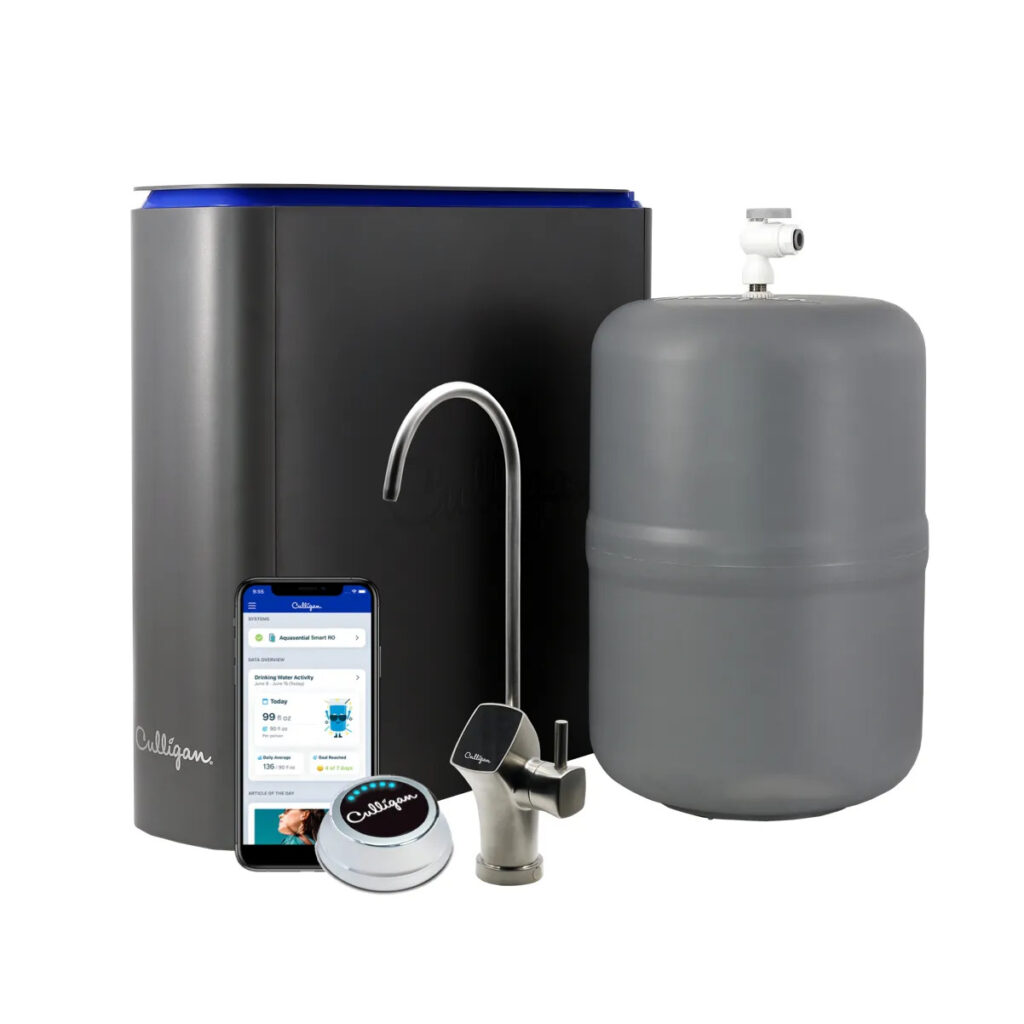
Culligan® Aquasential® Smart Reverse Osmosis Drinking Water Filtration System is a point-of-use system designed specifically to supply high-quality, filtered drinking and cooking water at a single location, typically installed under a kitchen sink with a dedicated fauce
KarSare Water Systems proudly offers the Culligan® Aquasential® Smart Reverse Osmosis Drinking Water Filtration System, one of the most advanced residential reverse osmosis systems available today.
This innovative system is designed to provide exceptional drinking water while making ownership easier than ever. Key Benefits:
- Certified to reduce over 90 contaminants, including many PFAS compounds, lead, arsenic, mercury, chlorine, microplastics, bacteria, viruses, and more.
- Certified to reduce Total PFAS by more than 99%
- Advanced multi-stage filtration for outstanding water quality.
- Smart monitoring through the Culligan Connect® app.
- Automatic filter replacement reminders.
- Water quality tracking and system performance monitoring.
- Exceptional water efficiency compared to many traditional RO systems.
- Great-tasting water directly from a dedicated faucet.
Professional installation and ongoing local service from KarSare Water Systems.
The system combines sediment filtration, activated carbon filtration, a high-performance reverse osmosis membrane, and optional advanced filtration cartridges to dramatically reduce contaminants while improving taste, odor, and overall water quality.
Since drinking and cooking are the primary ways PFAS enter the body, a reverse osmosis system provides excellent protection where it matters most, and this may be the most economical solution.
Whole House Filtration of PFAs
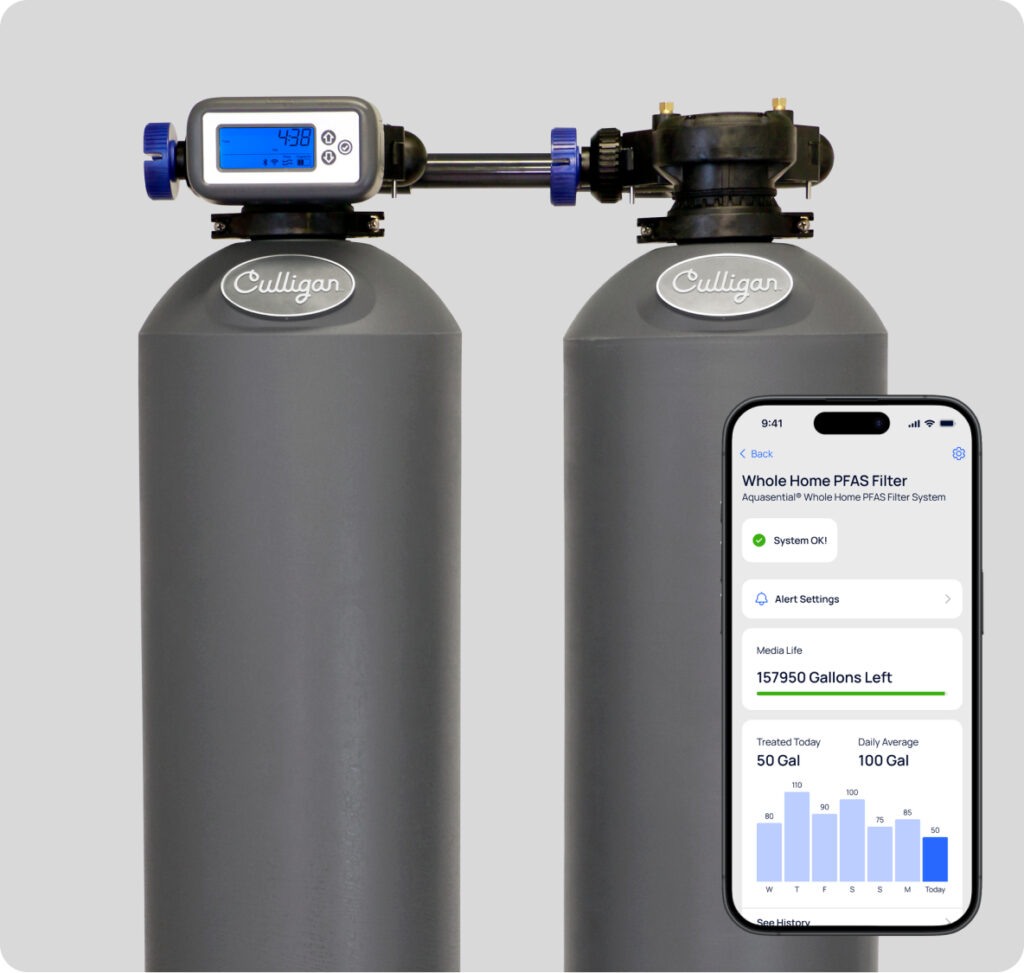
Aquasential® Whole Home PFAS Water Filter is Culligan’s flagship point-of-entry (POE) PFAS treatment system and is designed to filter all the water entering your home before it reaches your faucets, showers, appliances, and water heater. It is one of the few whole-house systems certified for Total PFAS reduction.
Feel confident in your drinking water with the Aquasential® Whole Home PFAS Filter, one of the only whole home PFAS water filter systems certified to NSF Standard 53 for total PFAS reduction.
Key Features:
- Third-party certified to NSF/ANSI Standard 53 for Total PFAS reduction
- Reduces up to 99.9% of Total PFAS under certified testing conditions.
- Protects every faucet in the home
- Uses a dual-tank design for broader PFAS removal:
- Premium activated carbon
- PFAS-selective ion exchange media
- Minimal impact on household water pressure
- Available for municipal or well water
- Indoor and outdoor installation options
- Smart Flow Monitor tracks remaining filter life
- Compatible with the Culligan Connect® app for monitoring and maintenance alerts
VIII. How should you get started? Test Your Water
Not every home has the same water quality. Whether your home uses municipal water or a private well, a professional water test is the first step toward understanding what is actually in your water.
At KarSare Water Systems, we provide personalized water testing and recommend solutions based on your home’s unique water—not a one-size-fits-all approach.
Our experienced team can help determine whether an under-the-sink reverse osmosis system, a whole-house filtration system, a water softener, or a combination of solutions is right for your family.
Enjoy Greater Peace of Mind with KarSare Water Systems
Clean drinking water is one of the most important investments you can make for your family. If you’ve been wondering whether PFAS or other contaminants may be present in your water, now is an excellent time to find out.
Schedule your FREE water analysis with KarSare Water Systems today.
We’ll help you understand your water, explain your options, and recommend the right Culligan solution to give your family cleaner, healthier, better-tasting water for years to come.
Sources
- U.S. Environmental Protection Agency. EPA Announces $9.4 Million for Kentucky to Address PFAS in Drinking Water.
- Culligan®. Smart Reverse Osmosis Drinking Water Filtration System.)
- Culligan®. PFAS Water Filtration Solutions.
- KY Energy & Environment Cabinet “Per- and Polyfluoroalkyl Substances (PFAS)“