

The National Oceanic and Atmospheric Administration defines microplastics as small plastic debris about the size of a grain of rice or sesame seed. Microplastics can form when larger plastic pieces, such as grocery bags and soda bottles, deteriorate into smaller and smaller pieces over time in the natural environment. Additionally, plastic fibers from synthetic clothing can pass through your washing machine and the filters at the wastewater treatment plant and eventually make their way to natural waterways as discharge from the treatment plant. Similarly, tiny plastic fibers can pass through your dryer vent into the atmosphere and end up in natural bodies of water.
Microplastics have been found in oceans, lakes, rivers, bottled water and even tap water. One study referenced in The New York Times reports that “94% of the U.S. tap water samples analyzed in the study contained plastic particles.”
“That was the unsettling conclusion of a study published last year in Frontiers in Chemistry that analyzed samples taken from 259 bottled waters sold in several countries and found that 93% of them contained “microplastic” synthetic polymer particles.”
– TIME.com
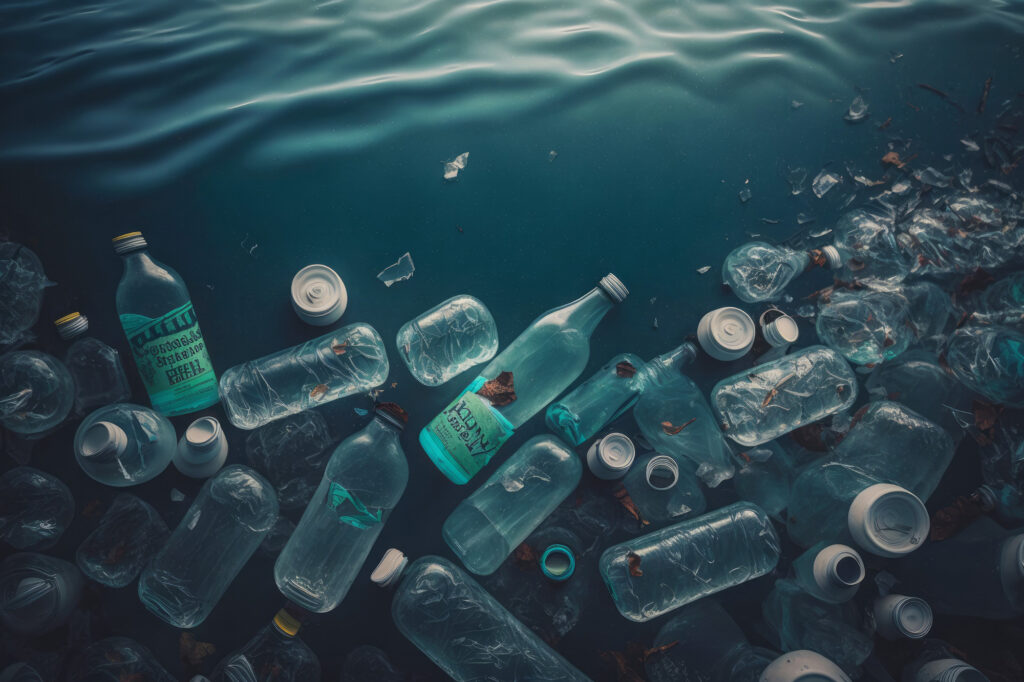
“How much microplastic has been found in drinking-water and drinking-water sources? In freshwater studies, reported microplastic particle counts ranged from around 0 to 1000 particles/L. Only nine studies were identified that measured microplastics in drinking-water; these studies reported particle counts in individual samples from 0 to 10 000 particles/L and mean values from 10-3 to 1000 particles/L. A comparison of the data between fresh water and drinking-water studies should not be made because in most cases freshwater studies targeted larger particles, using filter sizes that were an order of magnitude larger than those used in drinking-water studies.”
– World Health Organization
As part of the hydrogeologic cycle, the water discharged from one wastewater treatment plant can make its way to the water intake of a downstream water treatment plant. These microplastics can then pass through the filters at the water treatment plant, or in the case of some large municipalities that do not filter their water (New York, NY; Portland, OR; Boston, MA) can move right through from the reservoir to the distribution system, ending up in public water supplies.
WHAT IS HEALTH RISK OF INGESTING MICROPLASTIC PARTICLES IN DRINKING WATER?
“Studies on absorption indicate that microplastics >150 µm are likely to be excreted directly through feces.”
– World Health Organization
In studies of mice and rats, impacts can lead to inflammation of the liver, and NIH states that ingested or inhaled microplastics can accumulate in the body and trigger an immune response or cause local particle toxicity. And while studies are being conducted and there are many proven unknowns, one author claims there is still uncertainly regarding a link between microplastics ingestion and cancer. But what we do know is that microplastics carry highly poisonous carcinogenic or mutagenic chemicals that have damaging effects on the body and DNA, according to Matt Simon, author of “A Poison Like No Other“.
What is even more disturbing is that a 2020 study documented microplastic particles in the placenta of unborn babies. (See study.)
“The studies that will come out probably in the next five years will start to show more of these health effects. We already know for sure that there is a whole slew of chemicals in plastics that are known to be toxic to human beings.”
– Matt Simon
MAJOR CAUSES OF MICROPLASTICS IN WATER SUPPLIES
- Single-use Plastic Bags
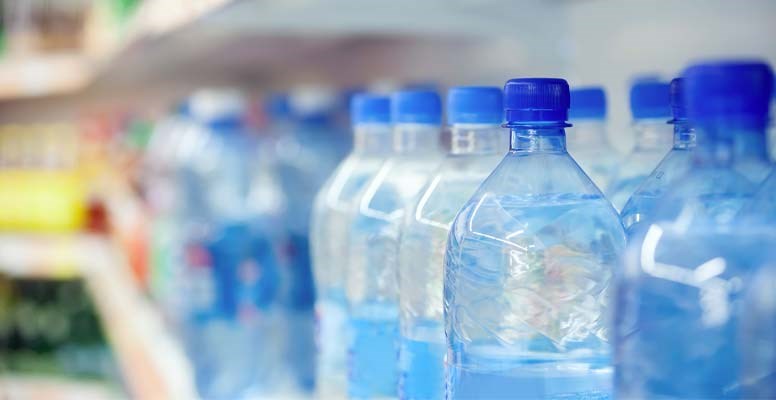
- Single-use Plastic Bottles
- Single-use Plastic Straws
- Plastic Fibers in Clothing
- Cosmetics
- Tires
Microplastics may be categorized based on their origins. If the particles were intentionally manufactured to be small, they’re considered primary microplastics. An example is plastic microbeads used in some health and beauty products. If the particles break down from larger plastic debris, such as single-use water bottles or food wrappers, they’re called secondary microplastics.
One specific type of microplastics, microbeads, were typically manufactured out of polyethylene and added to personal care products such as facial scrubs, body washes, toothpaste and cosmetics. According to a Forbes web article from 2016, microbeads can range in size from 1 micron to 1 mm. At the end of 2015, the Microbead-Free Waters Act of 2015, signed by President Obama, banned the use of microbeads in personal care products.
“However, research into the relationship between microplastics and health is ongoing. For example, a recent study published in “The New England Journal of Medicine” found a potential connection between microplastic/nanoplastic exposure and a risk of myocardial infarction, stroke or death; the study acknowledges limitations and notes that the findings don’t prove causality.”
Culligan.com

HOW CAN YOU PROTECT YOUR WATER FROM MICROPLASTICS?

Fortunately, reverse osmosis (RO) drinking water filtration systems fulfill these requirements and more. This solution helps ensure you get better, cleaner water right from the tap. With multiple filtration stages and processes, reverse osmosis systems can address a wide range of potential contaminants, including microplastics and forever chemicals.
Beyond that, it’s important to look for certifications of efficacy. Culligan’s advanced RO filtration systems are third-party certified to reduce microplastics by 99.6%.
WAYS YOU CAN REDUCE MICROPLASTICS FOR YOURSELF AND YOUR FAMILY
- Replace single-use plastic bags with reusable or paper alternatives.
- Replace single-use plastic cups, straws and silverware with sustainable solutions like bamboo, paper or reusable options.
- Eliminate single-use bottled water and sports drinks and use a refillable bottle instead.
- Look for items with minimal plastic packaging.
- Purchase clothing made with natural fibers.