
Tastes and odors in water – What are the causes and how can they be treated?
Pure water is colorless, tasteless, odorless, and free from any and all contaminants. But water is rarely found in its pure state. In fact, water that smells or tastes funny is a primary reason people turn to bottled water, which is expensive for you and taxing on the environment. Millions of barrels of oil are used each year to produce and transport bottled water, and billions of plastic bottles are added to our landfills. Plus, bottled water is simply filtered tap water, in many cases. Instead of dealing with the expense, inconvenience and guilt that come with buying bottled water, get your water tested, and install the appropriate water treatment system for clean and refreshing water right in your home.
The first step to better water is to find out what might be wrong with your water. Water that tastes or smells bad could be an indication that it contains one or more contaminants. The good news is that there are many water treatment options available to solve a variety of water problems. Rather than trying to figure out the best solution on your own, contact a water treatment expert to have your water tested and help you decide what is best for you.

Common Tastes & Odors in Water
ODOR #1: “Rotten Egg” Smell in Water
If there is a rotten egg or sulfur smell in your water, the most likely cause is hydrogen sulfide gas. Hydrogen sulfide is a colorless, corrosive gas from decaying plant material that occurs naturally in some groundwater. It is also often present in wells drilled in shale or sandstone, near coal deposits or oil fields. Sulfur-reducing bacteria, which flourishes in hot water, can also change natural sulfates in water to hydrogen sulfide, causing the classic “rotten egg” odor. Hydrogen sulfide can affect the taste of food and beverages. If the concentration of hydrogen sulfide is high enough, it can also leave that rotten egg odor on hair and clothing washed in the water and can accelerate the corrosion of metal parts in appliances. If you suspect your water contains hydrogen sulfide, contact a water professional for a water test.
ODOR #2: Metallic Taste and Odor
Water that tastes like metal can indicate the presence of iron, copper, manganese, zinc or other metals. Naturally occurring in groundwater, iron and manganese can affect the taste and odor of water as well as cause stains on things the water contacts.
Copper and zinc in water can be from an aging water distribution system or the corrosion of copper plumbing and brass fittings in your home. If you notice a metallic smell or taste to your water, it could contain copper or zinc. Though not harmful in trace amounts, large quantities of both zinc and copper can be harmful to humans.
ODOR #3: Earthy or Musty Taste and Odor
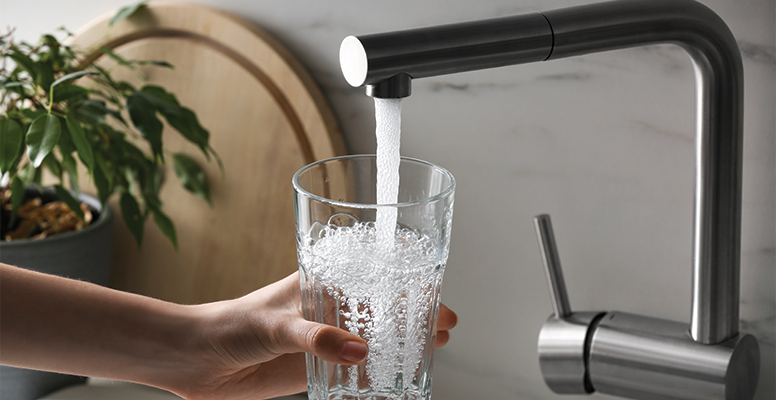
Sometimes people with well water or water from surface water supplies say their water has an earthy or musty taste or odor. This could be the result of decayed vegetation and other organic matter and are typically associated with different forms of algae. While the smells and odors are not toxic, they are unpleasant and can be offensive at very low concentrations. A water test will help determine what is causing the bad tastes and odors, and the appropriate water treatment equipment can be installed to solve the problem.
ODOR #4: Chlorine or Bleach Smell in Water
Another common complaint is water that smells and tastes of chlorine or bleach. This is typically found in city water supplies or where chlorine is used to disinfect a water supply. Many object to the smell of chlorine when showering, and chlorine can greatly affect the taste and smell of drinking water and foods and drinks made with water. Although chlorine is needed to disinfect water, and it should remain in the water when it travels through the distribution system, once it is in your home, the chlorine is no longer needed.
ODOR #5: Sewage Smell in Lexington KY
“Residents across the western portion of Fayette County expressed disgust over a waft of a sewage smell in their neighborhood, and now the city is sharing how it plans to dilute the smell long-term. For more than a year, hundreds of residents have complained about the putrid smell from nearby wastewater treatment plants. The Lexington water quality director says there’s a plan in place to fix it.” – LEX18 [READ ARTICLE]
Water quality specialists and experts in Lexington are hard at work addressing odor concerns from residents. And while they cannot fully identify the cause of the odor, they assure the public the odor is non-toxic, just annoying. Residents in various neighborhoods have been complaining since the Summer of 2023, so Mayor Linda Gorton signed an emergency contract with Webster Environmental Services to determine the odor cause and air testing. The division is working on a variety of projects worth nearly $2 million, including odor and sanitary control.
The city is looking at three areas of concern: the Cumberland Hill Neighborhood, the Meadowthorpe neighborhood, and the Pinnacle Neighborhood. All three are located near Wastewater treatment plants. As a result, Lexington’s Water Quality department has instituted the following procedures to mitigate the odor:
- SMOKE IT OUT: The next phase for the division of water quality is finding specific problem spots where odor is leaking from pipes into areas that affect residents. Because they can’t see the odor with a naked eye, the city will be pumping smoke to track the sewer scent. The smoke is non-toxic, but people with heart problems and breathing issues should take precautions. The smoke testing involves pushing non-toxic white smoke into manholes to identify cracked or broken sewer pipes. If a broken pipe is found, the Division of Water Quality will notify the property owner, and the property owner is usually responsible for repairs. [READ ARTICLE]
- CLEANING THE SYSTEM: Lexington’s Water Quality division has completed a thorough cleaning of the odor control systems at both of the city’s wastewater treatment plants.
- HIRING EXPERTS: They have also hired an environmental firm to test the systems that are currently in place and recommend upgrades that will provide the best results on the quickest timeline. The experts are to determine the cause. Some of those theories include lack of rainfall, equipment and less stormwater in the sanitary sewer system because of an overhaul of the system to protect water quality. But unsure of exactly what is causing the stench, the city has entered into an emergency contract with Webster Environmental Associates to help identify sources of the odor and testing conditions. [READ ARTICLE]
- ACTIVATED CARBON: They are also treating air with activated carbon in the same way one would treat water on a filter that has been hooked to a kitchen sink. The first installation of activated carbon is meant to pull out contaminants from the air in order to release a more neutralized odor. It also depends on how concentrated the odor is though; if highly concentrated the activated carbon effects will not last long. [READ ARTICLE]
- A CAUSTIC SCRUBBER: A caustic scrubber is another item that’s on the agenda. Caustic scrubbers are essential industrial equipment used to neutralize acidic gases in exhaust streams. They employ a caustic solution—typically sodium hydroxide (NaOH)—as a scrubbing medium, converting harmful acidic gases into harmless salts.
- MINERAL OIL: The water division has used other chemicals to safely test their systems but are now utilizing mineral oil with a motorized odor control fan.
SOLUTIONS TO ODORS:
Solution 1: Aquasential® Select Plus Series® Sulfur-OX3® Water Filter

Refresh your home’s water and address rotten-egg smells with a sulfur filter that targets the hydrogen sulfide problems common in well water. This affordable system provides cleaner, crisp water without unpleasant odors. Address hydrogen sulfide problems with natural aeration technology. cTake comfort that operation and reconditioning are chemical-free with a process that naturally cleans your water.

Solution 2: Aquasential® Smart High Efficiency Sulfur-Cleer® Water Filter
Give your home a high-impact upgrade with a sulfur water filter for well water that not only can tackle rotten-egg smells but also handles iron problems. Plus, stay connected to your system from anywhere with smart features that add convenience. Tackle two water problems with one system, and get the stability and long-lasting performance that Culligan solutions are known for. Feel at ease knowing that the water filter for your home uses an advanced aeration process to target contaminants in your water.¹ Bypass the filter from the system or via the Culligan Connect App for situations when you don’t need filtered water.
In conclusion,
Water quality can vary from home to home, neighborhood to neighborhood and region to region. Many things can cause water to smell and/or taste bad. To fully understand what is going on with the water in your home, schedule a water evaluation and consultation with our KarSare Water experts. Once you know the causes, you can determine the best water treatment plan of action.