

Cloudy water can be concerning. Learn more about what causes cloudy water, and how to address it to make your home’s water better.
Cloudy tap water—often called “milky” or “white” water—is usually caused by tiny air bubbles trapped in the water, especially after changes in pressure (like recent plumbing work, temperature shifts, or seasonal water supply changes). In many cases, this is harmless and will clear up if you let the water sit for a minute or two—air rises and dissipates from bottom to top. However, if the cloudiness doesn’t clear, appears more gray or brown, or is accompanied by odor or taste issues, it could indicate sediment, minerals, or contaminants that should be tested.
Cloudiness, murkiness or grayish water can be unsightly and concerning if you don’t know what the cause is. It is usually caused by dissolved or suspended solids or excess air in the water; this can also be referred to as “turbidity.” According to the United States Geological Survey (USGS), turbidity is the measure of relative clarity of a liquid and is a measurement of the amount of light that is scattered by the material in the water. Higher turbidity or cloudiness usually means there is a higher concentration of dissolved minerals, bacteria or metals in the water. It is difficult to determine exactly what is making the water cloudy simply by looking at it. Many things like excess air, dissolved minerals, bacteria, metals or other pollutants can cause water to be cloudy.
WHAT CAUSES CLOUDY WATER?
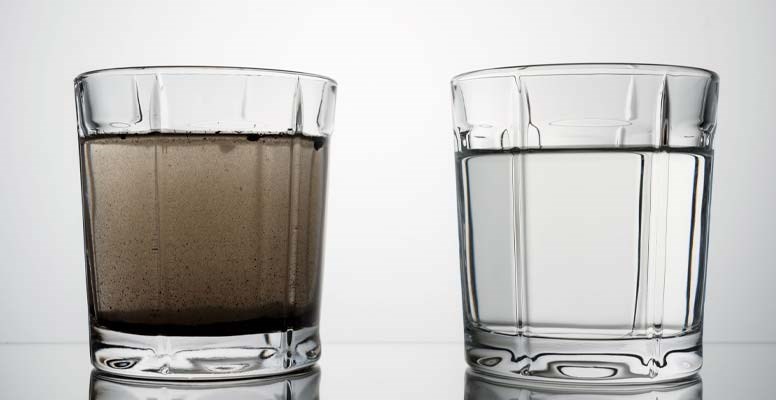
Tap water that appears to be cloudy or milky can often be attributed to excess air inside of the water. Hot water is often more cloudy than cooler water since expanded molecules trap more gasses that appear as small bubbles in the water. This type of turbidity usually dissipates after a few minutes as the captured air bubbles rise to the surface and escape into the air.
Not all cloudy water is caused by excess air, but it can also be caused by metals, minerals, or bacteria, which can also tint the water different colors. This can be caused naturally or from land disturbances such as construction, storms and urban runoff. As the water makes it’s way through the water system it comes into contact with different materials and minerals that can dissolve into the water.
A water main break or construction on the water main leading to your home is another common cause of turbidity in homes with city water. If there is a water main break near your home, you may notice your water appears cloudy or dirty. This is often caused by sediment and excess air entering the water supply. When this occurs, local health officials may announce a boil alert to kill bacteria and viruses that may have entered the water supply, but boiling may not help with cloudy water issues. To further improve water quality, install a water filter to significantly reduce contaminants, sediment or minerals that cause turbidity.
From a water treatment standpoint, it’s important to identify the root cause. You should consider testing your water for:
- Total Dissolved Solids (TDS) – measures overall mineral content
- Hardness (calcium & magnesium) – common in Kentucky and can cause haziness
- Iron and manganese – can create discoloration or cloudy appearance
- Chlorine or chloramines – may affect taste and clarity
- Sediment/turbidity – indicates particles in the water
- Bacteria (coliform/E. coli) – especially important for well water
- Nitrates and PFAS (“forever chemicals”) – for deeper safety concerns
If your water clears quickly, it’s likely just air and not a concern. But if it remains cloudy, leaves residue, or has a smell or taste, it’s a good idea to have a professional water test performed. This ensures you’re not just treating the symptom, but addressing the actual water quality—whether that’s with filtration, softening, or a reverse osmosis system.